Orchestrating LLMs & Agents Across Your SDLC

Howard Ekundayo
September 5, 2025
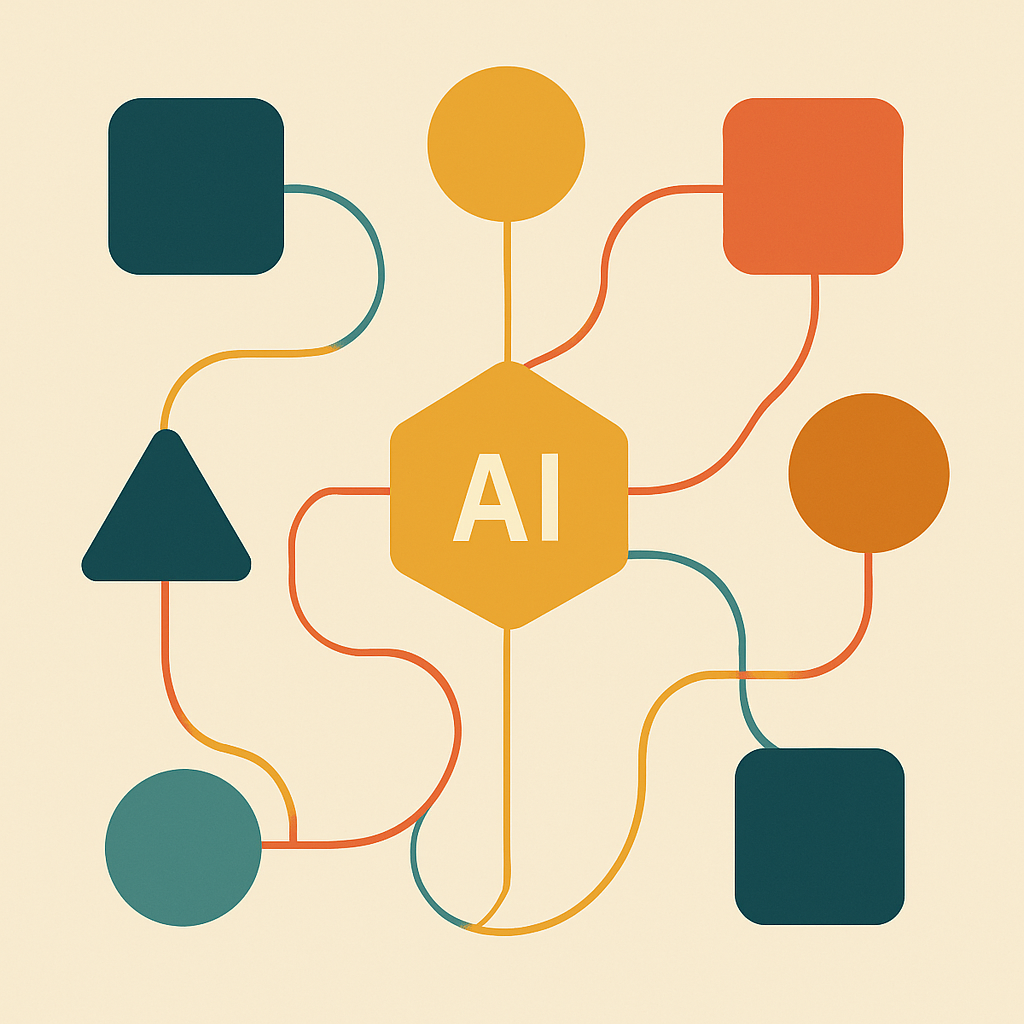
The era of single AI tool adoption has ended. Leading engineering organizations now orchestrate multiple specialized AI agents across their software development lifecycle. This shift requires a new competency. Teams must understand not just what each tool does, but precisely when to deploy it for maximum impact. The difference between organizations that master this orchestration and those that don't will define the next generation of market leaders.
Consider the transformation in development velocity when you map the right AI agent to the right task. A recent product prototype that would traditionally require months of development compressed into weeks through strategic AI orchestration. The key insight wasn't using AI. It was using the right AI at the right moment. Claude's web capabilities for market research. Claude Code for architectural scaffolding. Cursor for rapid iteration. Codex for autonomous complex refactors. Each tool selected for its specific strengths, orchestrated in parallel to maximize throughput.
The Persona-Based Framework
Product managers leverage different tools than engineers. During discovery phases, PMs should prioritize Claude's web-enabled research capabilities to analyze market dynamics and competitive landscapes. The large context window enables synthesis of dozens of sources into actionable insights. For PRD generation, maintain that same Claude session to preserve context continuity. Engineers, conversely, should start with Claude Code for initial architecture decisions, providing the PRD as context for opinionated technical choices. This handoff between tools and personas creates a seamless flow from market insight to technical implementation.
"The ability to select and orchestrate the right AI tool for each task is becoming essential knowledge for contemporary software engineers to remain competitive."
Designers face unique considerations in this new paradigm. While visual design tools haven't achieved the same agent autonomy as coding assistants, the integration points matter. Design system documentation should live in formats that AI coding assistants can parse effectively. Component specifications need structure that enables Cursor or Claude Code to generate pixel-perfect implementations. The most effective design teams now optimize their deliverables for AI consumption, not just human interpretation.
Execution Velocity Through Tool Selection
Task complexity determines tool selection. Simple feature additions benefit from Cursor's inline assistance. Complex architectural changes require Claude Code's broader context understanding. Bug resolution and technical debt reduction leverage Codex's autonomous PR generation. This isn't about choosing favorites. It's about matching tool capabilities to task requirements. Organizations that codify these selection criteria into their development workflows see immediate productivity gains. Teams report 3x to 10x improvements in delivery speed while maintaining or improving code quality.
The strategic advantage compounds over time. Engineers who master multi-agent orchestration become force multipliers for their organizations. They parallelize work streams previously constrained by human bandwidth. They maintain quality through AI-assisted code review and testing. Most critically, they free human creativity for high-value problems while delegating implementation details to specialized agents. This isn't the future of software development. It's the present reality for teams willing to embrace the paradigm shift. The question isn't whether to adopt AI tools. It's whether your organization will master the orchestration required to compete in this new landscape.
Learn more about this article
The AI assistant uses the content of this article to provide relevant answers. Information may not be 100% accurate.
Powered by claude-haiku-4-5